Showing posts with label Revelation. Show all posts

Monday, August 1, 2016

666 - The Mark of the Beast

A look at Revelation 13 - The Mark of the Beast

     Whenever I think about the Mark of the Beast.... my mind immediately goes to the youth camp in Krugersdorp, a town close to Johannesburg, South Africa. The name of this Youth Camp was Maranatha, which literally means Come Lord Jesus. It had a huge 30 ft. cross made out of white painted rocks stacked against a steep hill that lit up at night. It could be seen for miles and everyone knew about this camp because of the cross. One of my memories of this Middle school Camp experience was watching the movie “The Thief in the Night.” Even back then, it should have been R-rated because of the intense emotional trauma it caused to me and my friends who had never seen a movie, let alone something so disturbing. The primary focus of this movie was a dispensational portrayal of the rapture and what happens to those left behind. Unbeknownst to me, this was the beginning of a fear-based spirituality that would take years to undue. One thing was for sure, after watching this movie; you knew instinctively that you never wanted anything to do with the number 666. Did you know there is name for this phobia? The technical term for the fear of the number 666 is hexakosioihexekontahexphobia. That is also the longest word in the French dictionary which is ironic for the fear of 3 numbers. In Revelation 13 the land beast is famously identified as a person whose number is 666 (Rev 13:18). This is probably one of the most well known symbolic and even superstitious numbers of all time.

     Back then, I was told that the future world dictator and his supporters are expected to promote one world religion and to use computer technology to control the global economy. The big story was that a cash-less society was on the horizon and everyone who participates will have to be marked with a number. Some warned that credit card numbers or the international product code numbers were all part of the ploy of the beast to pull you in. Proponents of this scenario gained credibility by claiming to offer a strictly literal understanding of the Bible.

     It is however hard to maintain this case. Previously we have made the case that the Apocalyptic Genre requires that we read the text symbolically, not literally. This should be applied to the number 666 as well. The question is not whether to read the text symbolically, but how to read its symbolism. The issue is whether the visions of the beasts in Revelation 13 function as coded predictions concerning figures that will appear at the end of time, or whether the passage depicts threats that affect people of many times and places.

     One of the requirements for proper exegesis is to consider how the imagery would have communicated to the readers in the seven churches. Since John wrote in order to be understood by them, we must consider what meaning they might have seen in this number 666. So, are you ready? Here it comes...Most scholars believe that 666 is the numerical name for Nero Caesar. Koester says:
In John’s day they assigned numerical value to letters. The practice was not uncommon. On the level of street culture, for example, a graffiti artist at Pompeii used a number for the name of his beloved when he scrawled on the wall: "I love her whose number is 545." By the time Revelation was written, Nero was dead, but John portrays the beast as a Nero figure in order to underscore the threat that it poses. John sought to startle the Christians who thought that the best way to get along in pagan society was to accommodate its practices under the assumption that it was all quite harmless.  Through his imagery John warns, "`Beware, it is Nero all over again,' just as one might say, whenever we hear anti-Semitism, `Beware, it's Hitler all over again.*
     So, if we know that the number 666 is Nero, shall we stop trying to figure out who is the next beast? Yes and No. Yes you can stop trying to figure out who will emerge as the leader of a one-world government who marks his followers. But no, you can’t stop looking for the beast that marks his followers. The beast still brainwashes people with propaganda about “what they think” (forehead) and “what they do” (forearm). The beast parades as fame and fortune and lures you to think that you can have it all. He invites us to the altar of materialism and sexual seduction. The beast inspires its followers to embrace the belief that the Empire is Divine and complete, but the truth is the number 666 means incomplete, falling short of the complete number 777.

     Instead, may we be marked by the lamb and follow Him, the one who is the true emperor of the Earth! His name is Jesus Christ. He is the only one who is complete. In fact Jesus’ numerical # goes beyond 777, his number adds up to 888.

* Craig R. Koester. Revelation and the End of All Things (Kindle Location 1944). Kindle Edition.


Questions to ponder:

  1. Do you ever find yourself avoiding the number 666 or pausing when you encounter it? 
  2. Does the idea that 666 is not a future person but rather a warning about succumbing to an ideology affect your thinking about the world we live in? 
  3. How does the idea that "forehead" represents "what we think" and "forearm" represents "what we do" cause you to rethink your thoughts and actions?

Come be a part of COMMUNITY

  • Join Us For Worship - Join us Sunday mornings at 8:30 or 10:45 as we continue our journey into the fascinating book of Revelation.
  • Watch Live Online - Can't be with us in person? Be a part of COMMUNITYonline and join our live webcast Sunday mornings at 10:45. Click here.
  • Watch Past Sermons - Missed this week's sermon? You can watch it here.
    • Wednesday Evening Q&A - Join us Wednesday nights at 6:30 in the Gallery for a deeper look at Revelation
    • Ask Pastor Tredoux a Question - Submit questions to Pastor Tredoux here.

    Saturday, July 23, 2016

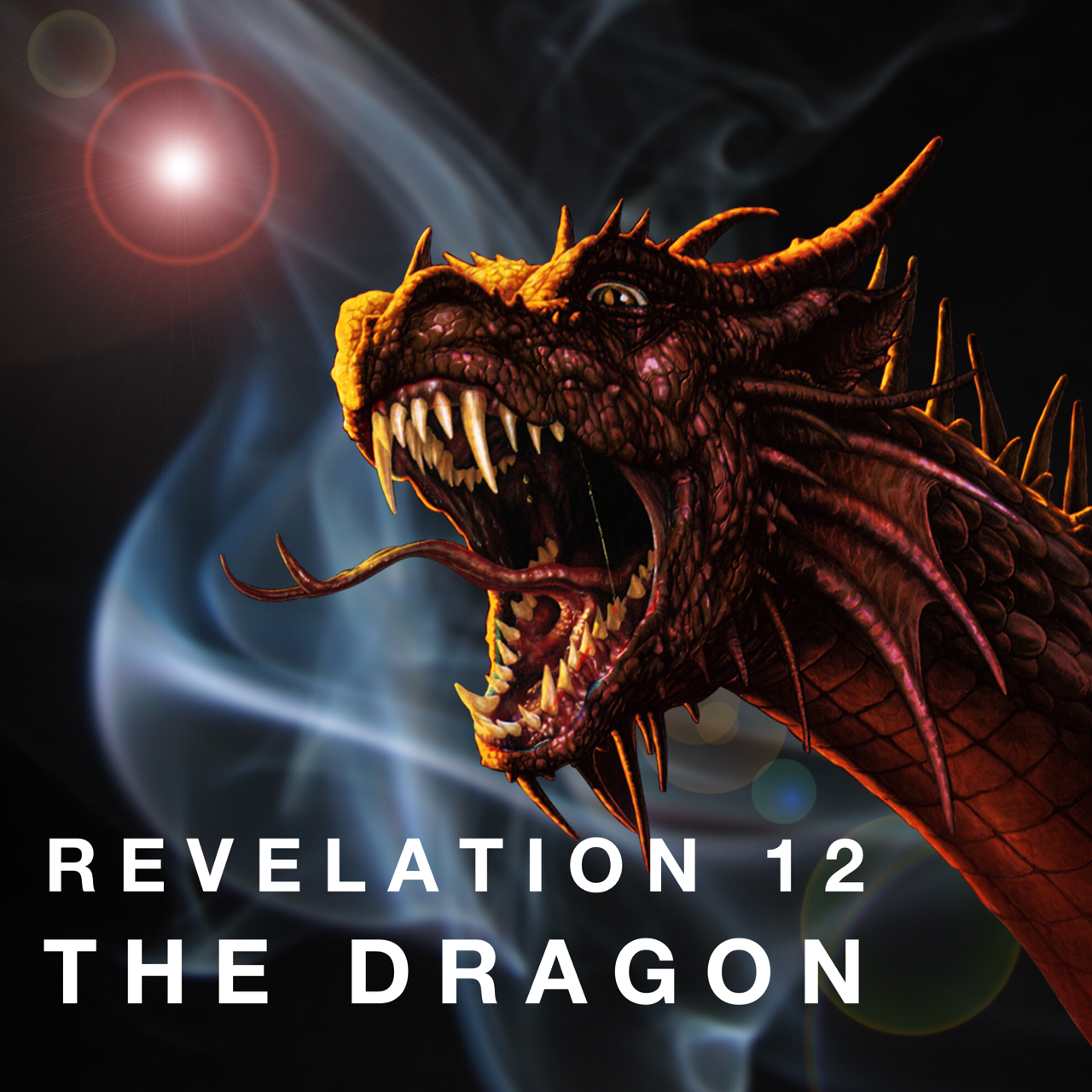
    The Dragon of Revelation 12

    I have a few confessions to make...Yep; I am going to come clean on a few things that you should know about me.  Okay, so here it goes... First, you should know that I have not watched even one episode of the TV series Game of Thrones. Secondly, I have no idea what the craze is about the Pokémon Go game, and lastly, of the original Star Wars trilogy that started in 1977, I have only seen The Return of the Jedi.  So, there it is, I already feel better just sharing this with you.

    However, even though I have not immersed myself in this epic pop culture, what is clear to me is that the adventures of various characters "a long time ago in a galaxy far, far away" has gripped the imagination of our culture across many generations. It is like everyone gets it when you say “The Force be with you.” I can see how people can get hooked on this epic phenomenon called Star Wars. It’s about illuminated swords clashing in an epic showdown between the forces of light and darkness. It is as if stories of the battle between the forces of good and evil wants to win our loyalties to the side of good and to alienate us from evil.  Somehow we know that that is the way it is suppose to be...

    We see this same phenomenon in the Roman culture during the days that John received the Revelation. It was Greek tales of good and evil that gripped the imagination of the people of that day. In one such epic story, as shared by Koester, 
    “The antagonist was a fierce dragon named Python and the protagonist was a woman named Leto, who was the mother of the god Apollo. When Leto became pregnant by the god Zeus, the dragon pursued her in order to kill her and her child. The north wind rescued Leto by carrying her away, so that she eventually found refuge on the island of Delos, which lay in the Aegean Sea. There the woman gave birth to Apollo and Artemis. Four days later, Apollo set off in pursuit of the dragon, soon slaying the creature to avenge his mother.”
    This story had such a powerful impact that the Roman emperors were able to put the tale to good use by associating themselves with Apollo, whose defeat of the evil dragon was said to have ushered in an age of peace and prosperity in the Roman Empire. Citizens of the empire could be expected to identify the woman in the story with the goddess Roma, who was the queen of heaven. Her son would be the Roman emperor, who overcame the forces of evil and chaos so that light and peace could flood the world.

    So, when John tells about a pregnant woman and a dragon in Revelation 12, Christians in the seven churches would have heard echoes of the familiar story of Leto. What is fascinating, however, is that John's version reverses the usual implications of the tale, so that in his version the woman in labor is not a pagan goddess, but the people of God; the child is not the emperor but Christ; and the dragon represents the forces that oppose Christ and threaten his church. In the end, a story that was used to celebrate the popular culture is now transformed by John to tell a powerful story of the battle in Heaven between the dragon and Michael, the archangel. Michael takes on the dragon, (who now is identified as Satan), and the next thing you know, Satan is cast out of heaven. This defeat dramatically limits the area in which Satan can operate. Instead of being able to work in heaven, denouncing the saints before God (Rev. 12:10), Satan is banished from heaven so that he must restrict his operations to the earth.

    This brings a powerful encouragement to those who heard this message from John for the first time and for us as well.  In short succession, let me highlight a few very encouraging points from this fascinating depiction of the limitations of the power of evil:
    • In the end, it is the saints that have a safe place under the throne of God, but Satan lost his place. This means that evil has no place in heaven.
    • It was Christ’s death, resurrection and exaltation that caused Satan to be cast from Heaven to earth. It is the slaughtered Lamb who ends up on the throne, not Satan. And this, my friends, is not a Game of Thrones, it is the real deal.
    • What we should know is that Satan rages here on earth like a trapped animal, since he has already lost Heaven. This should encourage us to resist him in the name of Jesus.
    • The serpent who tempted Adam and Eve in Gen 3, who accused Job in the throne room of heaven, who tempted Jesus in the wilderness and goes around like a roaring Lion is defeated. He is on a leash for just a short time.
    And together with the saints around the throne of God we say AMEN!

    By the way, this is not a George Lucas production!

    Come be a part of COMMUNITY

    • Join Us For Worship - Join us Sunday mornings at 8:30 or 10:45 as we continue our journey into the fascinating book of Revelation.
    • Watch Live Online - Can't be with us in person? Be a part of COMMUNITYonline and join our live webcast Sunday mornings at 10:45. Click here.
    • Watch Past Sermons - Missed this week's sermon? You can watch it here.
      • Wednesday Evening Q&A - Join us Wednesday nights at 6:30 in the Gallery for a deeper look at Revelation
      • Ask Pastor Tredoux a Question - Submit questions to Pastor Tredoux here.
      Saturday, July 9, 2016

      What about Hell?

           Two church members were having a chat about their local church where they worshipped. The conversation went something like this...
      “’How is it going at your church?’ ‘Well,' said the other church member.... 'we are going through an interesting time at our church. You see, a few months ago our church fired our pastor.’ ‘How come,’ the 1st member asked?’ ‘Well’ said the 2nd member, ‘it is like this...this pastor kept preaching that we are going to go to hell, and so we fired him.’ ‘Wow’ said the 1st member, ‘that seems to be very drastic. So how does your church deal with this difficult situation?’ ‘Well, you see, we got a new pastor,’ said the 2nd church member.’ ‘And how does he preach?’ the 1st member asked. ‘Well, it is interesting that you asked. He also preaches that we are going to go to hell.’ ‘So, what is the difference between this pastor and the one you had before? Are you going to fire him too?’ the 1st member asked. ‘No,’ the 2nd member responded. You see, when the first pastor preached it seemed like he liked preaching about hell, but when our new pastor preaches about hell it breaks his heart.’ ‘Wow,’ the 1st member responded and thoughtfully walked away."
           And so it is in many congregations today. As you know, we prefer to talk about the pleasant side of Christianity and we like preachers that do. But what do we say about the alternative, if people choose not to follow Jesus? If we don’t follow Jesus, as persons and communities, what results can we expect? How do we talk not only about Christian comfort, but also about discomfort? How do we grasp the significance of what the Church has said down the years about the awful possibility of final loss?

           First, it must be said as clearly as possible that as soon as we find ourselves wanting to believe in Hell we find ourselves in great danger. The desire to see others punished – including the desire to do the punishing ourselves – has no place in a Christian scheme of things. Of course there is a right and proper desire for justice, but the desire to punish, must be distinguished from this. If I want to see someone else in torment, it may say more about the condition of my heart than anything else.

           Second, most of the passages in the NT, which have been thought by the church to refer to people going into eternal punishment after they die, don’t in fact refer to any such thing. When Jesus uses language about the awful punishment in store for those who rejected his message, it must be read as warnings of the awful future that awaited the nation of Israel if she rejected the way of peace which Jesus was proposing. When Jesus spoke about “Gehenna,” the Greek word for hell, he was talking about the Jerusalem rubbish-dump – a great, foul, smouldering heap of trash away from the city. His warning was that those who persisted in going the way of nationalist rebellion rather than the way of peace would turn Jerusalem into a huge and foul extension of its own rubbish dump. And of course, as we know, this warning came true when Caesar Nero in 70 AD destroyed Jerusalem.

           Third, if we worship other gods, and not the one in whose image we were created, we run the risk of becoming less and less human. These other gods are not life giving. Every day on television we see images of those who have ceased being truly human, because they have given themselves over to the demonic gods of this world. They are more like beasts, when they make the decision to blow themselves up or kill innocent people. They in fact have become inhuman. Those who persistently refuse to follow Jesus, the true image of God, will by their own choice become less and less like him, that is, less and less truly human. We sometimes say... these people have turned into monsters. So, here is my point... If human beings insist that God leaves them alone then God’s final response is “as you will.” Because some choose to dehumanize themselves, and because God gave his human creatures the risky gift of freedom and choice, I also see God honoring that choice. Hell is the final resting place of the person who has chosen to reject God.  Hell is a condition of horrid Godlessness, outside the city, where a person is severed from the very source and giver of life and love. The reality of how God will handle this in the end remains a mystery. And let’s not forget about accountability. Every person will have to give an account of him or herself and stand before the judge, which is Jesus Christ himself. Here, I am glad to say that Jesus will be a fair judge. After all, he knows what it’s like to be human.

           In closing, we can’t ignore the heart of God. It is a heart of compassion not wanting anyone to go astray. 2 Peter 3:9 says: “It is not God’s will that any should perish, but that all should come to repentance.” The call for us is to follow the one who brings to us a kingdom of gentleness and justice. It is the voice crying in the wilderness...”Come to me, all you who are weary and I will give you rest.”


      Questions to ponder:

      1. Do you view hell as a place for people to get what they deserve or a sad finale to one's life? 
      2. How would this view of hell affect how you live day to day and interact with others? 
      3. How would viewing hell as "A condition of horrid Godlessness, outside the city, where a person is severed from the very source and giver of life and love" affect your sharing of the Gospel with unbelievers?

      Come be a part of COMMUNITY

      • Join Us For Worship - Join us Sunday mornings at 8:30 or 10:45 as we continue our journey into the fascinating book of Revelation.
      • Watch Live Online - Can't be with us in person? Be a part of COMMUNITYonline and join our live webcast Sunday mornings at 10:45. Click here.
      • Watch Past Sermons - Missed this week's sermon? You can watch it here.
        • Wednesday Evening Q&A - Join us Wednesday nights at 6:30 in the Gallery for a deeper look at Revelation
        • Ask Pastor Tredoux a Question - Submit questions to Pastor Tredoux here.

        Couldn't join us Wednesday night? Watch the Exploration Revelation Class - Week 4
        Recorded Live on July 6th, 2016


        Exploring Revelations with Pastor Johan Tredoux - Week 4
        Posted by COMMUNITY Covenant Church on Wednesday, July 6, 2016

        Friday, July 1, 2016

        Where Is Heaven?


        Heaven...Where is it? What is it? What can we learn from John's glimpse behind the veil into the throne room of God? This is week 3 of our 10 week exploration of the book of REVELATION. Thank you for being a part of COMMUNITYonline and journeying with us as we explore God's Word to the 7 churches of Rome.


        Where is Heaven?

        Imagine There’s No Heaven


             Where has Heaven gone to? A few years ago John Lennon, in a famous song invited us to imagine it didn’t exist. In a dreamy voice, he sang...
        Imagine there's no heaven
        It's easy if you try
        No hell below us
        Above us only sky
        Imagine all the people living for today 
             This song was very tempting for a generation tired of heaven being used as a carrot stick to get them to behave. Because this strange distant place exists, and because you might want to go there yourself some day, you’d better behave nicely here, or so the saying went. This was part of my story growing up as well. To me it meant, if you don’t drink, smoke or chew and stay away from girls that do, you might have a chance at Heaven.

             Today, our society is still as confused over Heaven as it was when Lennon sang his song. On the Christian side Heaven is central to the Gospel as a promise to those who put their faith in Christ. Given that Heaven is where Jesus went, we as followers of Jesus, better get our minds round it. Is it possible that the book of Revelation might just give us that fresh new insight we need to deepen our understanding of Heaven?

             So far, (our previous blogs) we have tried to understand John's apocalyptic tradition and the world of the Roman Empire in which he lived and wrote. Our next task is to come to grips with the questions of when and where John expected his visions to be “fulfilled.” Many people take Revelation's references to “the End” or to “heaven” as being about specific times or places that are “later” or “apart from” the time and place of first-century Roman Asia. There are then a few important questions we need to ask,

        •  How would John's audience have understood his language about “heaven”? 
        •  How did people in Roman Asia think of time and space? 
        •  What did the concepts of “heaven and earth” mean to the inhabitants of the first-century Roman Empire? 
        • What relationship existed between these “realms”?

        Space


             One of the challenges of the common notion of “heaven and earth” found in our world is that it projects two distinct places between which there is little connection. Part of this perception was developed from the way ancient Israel understood YHWH as a “sky-father” god like other powerful storm gods around them. The literal meaning of the Greek term ouranos, which is translated “heaven,” is “sky,” that is, the physical space above the earth. The same meaning is also found in the Hebrew word for heaven as seen in Gen 1:1. Here the word for heaven is “She-maim.” What is fascinating is that “maim” means water and “She-maim” means water from above. This very ancient understanding of heaven as reflected in our biblical creation story shows the primitive understanding people had of time and space. For them the earth was flat and Heaven was a fixed canopy from where water falls. This was before the days of Galileo. It is this understanding that still captures many Christians’ imagination of heaven.

             However, in Revelation we find John describing heaven from a different perspective. Heaven in Revelation is more about describing two realities. In Revelation, “Heaven” is holy while “earth” is evil. Earth is the perspective of empire. Heaven, on the other hand, is where John sees that the truth is unveiled. In Revelation, John does not describe heaven as a place far away “way beyond the blue.” For John, Heaven is God’s space, which intersects our space but transcends it. As the veil was pulled back for John, heaven was experienced as only a further dimension of our world. N.T. Wright says: 
        The Christian hope is not (despite popular impressions) that we will simply “go to heaven when we die.” As far as it goes, that statement is all right; after death those who love God will be with Him, will be in His dimension. But the final Christian hope is that the two dimensions, heaven and earth, at present separated by a veil of invisibility caused by human rebellion, will be united together, so that there will be new heavens and a new earth. Heaven isn’t therefor an escapist dream. Heaven is the extra dimension, the God-dimension, of all our present reality; and the God who lives there is present to us, present with us.
        John expects his audience to be familiar with apocalyptic writings, which mean that “heaven” is not in the sky or after death, but co-present with daily life, hidden only by a veil. In being invited to “heaven” by a heavenly angel, John of Patmos is given privileged access to the truth of things. As Richard Bauckham explains:
        John (and thereby his readers with him) is taken up into heaven in order to see the world from the heavenly perspective. He is given a glimpse behind the scenes of history so that he can see what is really going on in the events of his time and place.
        Because John of Patmos had personally seen the apocalyptic truth of heaven and had communicated this through his book, the Christians addressed in the 7 churches were able to know that it is where God lives and reigns that constitutes the ultimate reality, not the illusory reality of the Empire of Rome.


        Questions to ponder:

        1. Does this affirm or challenge your perception where and/or how you think of “heaven” as existing? 
        2. How would this view of heaven affect how you live day to day? 
        3. How do you see God's space intersecting with your daily life?

        Come be a part of COMMUNITY

        • Join Us For Worship - Join us Sunday mornings at 8:30 or 10:45 as we continue our journey into the fascinating book of Revelation.
        • Watch Live Online - Can't be with us in person? Be a part of COMMUNITYonline and join our live webcast Sunday mornings at 10:45. Click here.
        • Watch Past Sermons - Missed this week's sermon? You can watch it here.
        • Wednesday Evening Q&A - Join us Wednesday nights at 6:30 in the Gallery for a deeper look at Revelation
        • Ask Pastor Tredoux a Question - Submit questions to Pastor Tredoux here.

        Couldn't join us Wednesday night? Watch the Exploration Revelation Class - Week 3
        Recorded Live on June 29th, 2016

        Exploring Revelation with Pastor Johan Tredoux - Week 3

        Posted by COMMUNITY Covenant Church on Wednesday, June 29, 2016

        Thursday, June 23, 2016

        Interpreting Prophetic Literature

        Is prophecy about the future, the present, or the past?


        Thus Saith The Lord Prophetic Literature

        I have a “Word” for you...

             Sometime ago, in fact 27 years ago, I went to a prayer meeting here in KC. It was early in the morning. After the prayer meeting a man who attended the meeting, who sincerely felt that he was led to give me a word of prophecy, approached me. He stopped me and said: “Johan, I have a “word” for you. It has been revealed to me that you are going to go back to South Africa and you are going to meet up with 3 men and together God is going to use you in a powerful way.” That was it, and off he went. It is interesting to note that my house was on the market at that time. As I reflect back on that “word” given to me, all I can say is... I am still waiting for those 3 guys.

             What is it about us that we are so easily captivated by those who think they know history in advance? Could it be, that as a human race, with all the turmoil around us, we want to feel secure. We want to know what is going to happen to us. This is why fortune-tellers, tarot readers, psychics, mediums, sorcerers and witchdoctors are so popular and have been around for a long time. However, the Bible warns against a neurotic interest in the future and escapist fantasy into the future. In fact, the Bible forbids trafficking with people who make predictions and are into clairvoyance. (Deut. 18:14-15). And yet, in spite of this warning, there are those who persist in wanting to read Revelation primarily through the lens of prediction.

             A much overlooked factor in reading revelation is that the letter from John is not addressed to the Christians in North America who live in the 21st century, but to the Christians of the seven churches in Asia. Futuristic interpreters usually assume that Revelation's message will become clearer as the final days approach, and yet there are many scholars who believe just the opposite. They are convinced that Revelation's message would have been clearest to those who lived in John's own time. So, instead of looking for clues by combing recent headlines or news broadcasts, these scholars would rather study the language and literature of the ancient world. What these scholars are saying is that Revelation is not a coded collection of secrets that will finally become intelligible at the end of time, but it was an open book right from the beginning designed to communicate with the Christians who were alive in Rome at the time of John’s writing.

             And this is where I believe we will find our best clues into the nature of prophetic literature.

        So, what shall we make of Prophetic literature?

        • A common way to misunderstand prophecy, and especially the prophecy of revelation, is to suppose that it means prediction. But that is not the Biblical use of the word. Prophets are not fortune-tellers. The prophet is the person who declares, “Thus saith the Lord.” right here and now. The prophet says that God is speaking now, not yesterday and not tomorrow. 
        • We see throughout the OT and NT that prophets speak words of comfort and/or challenge, on behalf of God, to the people of God in their concrete historical situation. 
        • Some believe that Revelation is like a WWF wrestling match. Before the two wrestlers crawl in the ring, the outcome is already decided. We just have to wait till the end of the match to know who wins. God’s mind is made up. History is already plotted from beginning to end. Prophetic literature, however, is more like the World Series. The outcome is up for grabs. How each person plays makes a difference in the outcome. It really matters what we do. 
        • Prophetic literature calls for ethical responsibility, holy living, and repentance from sin, and social justice. The outcome of history is not in the hands of a boxed-in God. The future belongs to a God who makes covenants with people and is free to respond to what we do. God is free to come in mercy or judgment. God is free to bring this present evil age to an end now or later. This prophetic style is seen very strongly in the letters written to the churches. 
        • The prophets were convinced that a covenant making God works in history and through his people to accomplish His purposes. It is important to note that John doesn’t see salvation sweeping in from outside of history. John wants the readers of the seven churches to know that salvation is already present... in history. The true Savior of the world is the slaughtered Lamb whose Kingdom is already unfolding.
        • One of the strong characteristics of prophets is that they always try to connect the God of the beginning with the God of the end. That is, they communicate consistently that God cares about his creation and wants to redeem it and not destroy it. We see this very strongly in Revelation. John wants to communicate that God is going to finish what he started. John speaks of a God who makes all things new. Those in the first century were encouraged to follow the Lamb into the new creation and this applies to us as well. Of course, this rules out a God who blows the planet to pieces or rain asteroids down on us. 
        • Given the presence of false prophets like Jezebel, we can determine the authenticity of a prophet's message if the prophet promotes faithfulness to God or whether it leads people away from God. The preface to Revelation says that John wants people to respond to his prophecy by "keeping" it (Rev. 1:3). 
             In conclusion, Eugene Peterson reminds us that the prophetic word eliminates the distance between God’s speaking and our hearing. He says: “If we make the prophetic word a predictive word we are procrastinating, putting distance between ourselves and the application of the word, putting off dealing with it until some future date.” There are, to be sure, references to the past and implications for the future, but the predominate emphasis of the prophetic word is on the now. There are predictive elements in some prophecy (and some in Revelation, like the anticipation of the new Heaven’s and the new Earth), but they are always in service to a present message.


        Questions to ponder:

        1. How do you discern a prophetic word? Is it truly a "word from God" or someone's well intentioned belief?
        2. If someone was to share with you a predictive prophetic word, how do you think it would affect your life? Would it impact your view of the present and/or the future? Would it be a blessing or a distraction?

        Up Next: Where is heaven?

        Come be a part of COMMUNITY

        • Join Us For Worship - Join us Sunday mornings at 8:30 or 10:45 as we continue our journey into the fascinating book of Revelation.
        • Watch Live Online - Can't be with us in person? Be a part of COMMUNITYonline and join our live webcast Sunday mornings at 10:45. Click here.
        • Watch Past Sermons - Missed this week's sermon? You can watch it here.
        • Wednesday Evening Q&A - Join us Wednesday nights at 6:30 in the Gallery for a deeper look at Revelation
        • Ask Pastor Tredoux a Question - Submit questions to Pastor Tredoux here.

        Friday, June 17, 2016

        Revelation Unveiled

             This summer at COMMUNITY, I have embarked on a very invigorating and adventurous path, that is... to spend ten Sundays on the Book of Revelation. I have taught on end time Eschatology at Mid-America Nazarene University, but I have never preached on it. So you can say that I have officially entered into “The Danger Zone.” You remember that song from the movie Top Gun?

             I am sure like many American’s, I have grown up with a real fear of Revelation. Especially after I saw the movie “The Thief in the Night,” which came out when I was about thirteen years old. It literally scared the hell out of me. (no pun intended) I remember many times coming home from school not finding anyone, and my immediate thought was that my family was raptured and I was left behind.

             Even so, I am sure that you would agree with me that Revelation is one of the most powerful texts in the Western World. Some find the book scary, others alarming, and for some, confusing and even dangerous. And I have to agree. Who can forget the modern-day Branch Davidians incinerated at Waco and the Heavens Gate community, who committed mass suicide thinking they were joining a spaceship?
                   
             Many have set dates for the return of Christ only to be disappointed. So, why study Revelation? Can Revelation be understood? Is it good news or bad news? Is it primarily about Christ or the antichrist? Does it concern the past, the present, or the future?

             I hope you will discover with me, over the next ten weeks, that Revelation is not about the antichrist, but about the living Christ. It is not about a rapture out of this world, but about faithful discipleship in this world. I hope that at the end of the book we will not find ourselves in millennial debates, but find ourselves on our knees worshipping the Lamb.

             So, here are a few things for you to consider as we begin our journey with Revelation...

        First things first... putting it in context

             One of the rules of Biblical interpretation is that we consider the historical context and audience to whom the text is addressed. This includes the author, the time the text was written, the specific literary genre used, as well as the reason for writing the text. So here is a quick answer on the first three:
        • Who is the Author? Most scholars don’t know who John is. Some have thought that John is one of the disciples, but most scholars believe that he is a traveling prophet or the bishop over the seven churches that he is writing to. 
        • When was it written? Most scholars have placed the writing during the reign of the Emperor Domitian from 81-96 A.D. It was a relatively peaceful time in the Empire with little persecution of Christians during this time.
        • To whom was it written? What is often overlooked is that John is sharing this Revelation with the 7 churches of Asia Minor. It was not written to the church of the 21st century. It is important to know that it had a profound meaning to those who received this letter from John.  They understood what he was talking about. His letter to the churches was all 22 chapters.


        What is the literary style of Revelation?

             This is a more difficult question and if we can get this right, we have the best change to unpack some of the mysteries of Revelation. Scholars agree that Revelation use both the Apocalyptic and Prophetic style of writing. It is then critical for us to understand this particular form of writing. This will give us the filters we need to make sense of all the bizarre symbols and weird language used in Revelation. So lets look first at the Apocalyptic Style of Writing:
        • Apocalyptic Genre: What is fascinating is that the Apocalyptic style of writing had a 400 year history going all the way back to the Persian empire. This style of writing was very familiar to the author of Revelation. In fact it is used throughout the book of Revelation.
        • One of the most common characteristics of A.G. is that it is filled with dualism... like lamb vs. the beast, light vs. darkness, or God vs. Satan. It is filled with imagery and symbols that should not be taken literally. We should be asking “What do these synbols mean?” Symbolic numbers is also a strong characteristic of the Apocalyptic writing style. I mean, who doesn’t want to know what 666 really means?
        • Over it’s 400 year history, the A.G. usually surfaces during oppressive regimes or empires. It is written when things are going bad. This is why this style of writing is usually very pessimistic. They have seen so many failed attempts to change the systems of oppression, that they don’t think God can work from within history to accomplish His purposes. A new future will then have to come from outside –of –history. However, it is important to note that John doesn’t see salvation sweeping in from outside of history. John wants the readers of the seven churches to know that salvation is already present... in history. The true Savior of the world is the slaughtered Lamb whose Kingdom is already unfolding.
        • In verse 4 John calls Jesus the one “who is, who was, and who is to come. This is a strange way to use the tenses. We usually go with past, present, future. But John puts the present first and goes backward and forward from there. This points to a much-overlooked factor that has to be considered when we interpret Revelation. It is the time factor. Scholars indicate that the time orientation of the Roman world was more focussed on the present. That is, they thought that the duration of their present time will remain that way forever. Therefore the mindset was that the present drives what is forthcoming. The future is already in the process of becoming. When you compare this idea of time with us, Scholars would describe our time worldview in the USA to be more future oriented. That is... the future drives what is present.
        • It is also a common feature of the Apocalyptic style of writing that the author repositions himself earlier in time and talk about the past as if it is in the future. Because of its apocalyptic genre, we see that John writes of the cataclysmic events of the previous generation, such as Nero’s persecution of the Christians. 54-68 AD. He writes about the destruction of the Jewish temple in Jerusalem. He even goes as far back as the time in Egypt when the Jews were slaves and the time in Babylon when the Jews were in Exile.

        Unlocking Revelation

             This brings me to the key to understand the book of Revelation. In order to reveal, to rip the cover from the way things are, John is saying to the 7 churches, I want you to know what the Spirit has revealed to me about the real reality of the world we live in.. I want you to see two worlds. I want you to know that the victorious Christ is already present...he is the real deal. The New Creation is already underway. Everything else is fake. The true reality is the one who is and who was and who is to come ... Present , past, future.

        • The key to understand Revelation is that John wants the 7 churches to know that Jesus, the Lamb of God, not Caesar, is the true Emperor of the earth.
        • Revelation is a very daring, very creative, absolutely dangerous proclamation that Jesus Christ, not the Caesar, is the true Emperor of the earth. (It is this message that will either get you crucified or exiled. The Roman Empire did not allow descend)
        • That’s what Revelation is up to. Revelation is a theatrical prophecy in the Apocalyptic genre of how Jesus, the Lamb conquers the Beast, whom John portrays as Rome.
        • John speaks of Rome as Babylon, the Beast, the great whore. John was afraid that the Christians in the seven churches are being lulled to sleep into embracing Roman Civil religion. John is reminding them.... Remember Rome is a beast. Rome is not just evil when it is persecuting Christians; Rome is evil in peacetime as well. It is idolatrous!

        Questions for you to ponder:

        1. What is your first thought when thinking about studying Revelation? Fear? Excitement? Trepidation?
        2. Does understanding the context and literary style of Revelation challenge or support your current interpretation?
        3. 2000 years from now how will cultures interpret our modern day symbols? Will they understand the fall of the Berlin Wall, 9/11, Facebook?

        Up Next: The Unique Nature of Prophetic Literature!


        Come be a part of COMMUNITY

        • Join Us For Worship - Join us Sunday mornings at 8:30 or 10:45 as we continue our journey into the fascinating book of Revelation.
        • Watch Live Online - Can't be with us in person? Be a part of COMMUNITYonline and join our live webcast Sunday mornings at 10:45. Click here.
        • Watch Past Sermons - Missed this week's sermon? You can watch it here.
        • Wednesday Evening Q&A - Join us Wednesday nights at 6:30 in the Gallery for a deeper look at Revelation
        • Ask Pastor Tredoux a Question - Submit questions to Pastor Tredoux here.